
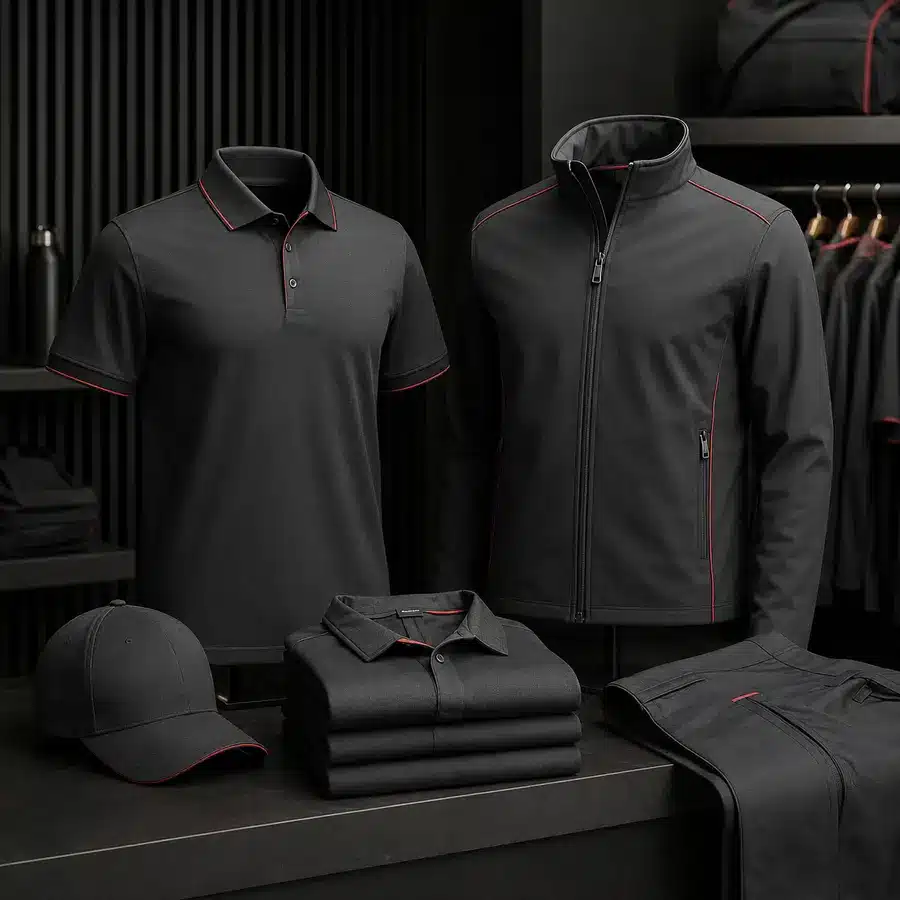

A company’s clothing can say a lot about its brand.
When employees wear branded shirts, jackets, caps, uniforms, or other apparel, they become visible representatives of the business. Customers can identify the company more easily, employees can feel more connected to the organization, and the brand can maintain a consistent appearance across different locations and events.
For businesses in Dubai, this can be especially valuable. Companies operate in a highly competitive commercial environment where recognition and professional presentation can influence how people remember a business.
Branded corporate apparel gives companies a practical way to combine employee clothing with their wider branding strategy. When planned properly, it can support recognition, professionalism, team identity, and marketing.
What Is Branded Corporate Apparel?
Branded corporate apparel refers to clothing and wearable items customized with a company’s visual identity.
This can include:
- Polo shirts
- T shirts
- Formal shirts
- Jackets
- Hoodies
- Caps
- Vests
- Workwear
- Aprons
- Safety clothing
- Staff uniforms
- Promotional clothing
Customization may involve a logo, company name, slogan, employee role, or other brand elements.
Corporate Apparel vs Regular Workwear
These terms are sometimes used interchangeably, but they can serve different purposes.
| Corporate Apparel | Regular Workwear |
|---|---|
| Focuses strongly on brand presentation | Mainly focuses on job requirements |
| Often uses company branding | May have little branding |
| Supports marketing | Supports workplace functionality |
| Common at events and customer facing locations | Common in operational environments |
| Can be designed around brand identity | Usually designed around practical needs |
Many businesses combine both functions by creating clothing that is comfortable, practical, and clearly connected to the company.
How Corporate Apparel Strengthens Brand Recognition
Brand recognition develops when people repeatedly encounter consistent visual signals.
Clothing can become one of those signals.
Turn Employees Into Brand Representatives
An employee wearing a company shirt can make the brand visible in places where conventional advertising may not reach.
For example, staff members may wear branded clothing while:
- Visiting customers
- Attending exhibitions
- Working at events
- Meeting suppliers
- Delivering products
- Providing services
- Travelling between locations
Every interaction provides another opportunity for someone to notice the company.
This creates brand visibility through normal business activity.
Use Consistent Visual Elements
Your apparel should reflect the same identity used across your website, signage, packaging, social media, and marketing materials.
Consider consistency in:
- Logo placement
- Typography
- Brand colours
- Graphic elements
- Employee roles
- Garment style
When these elements remain consistent, customers can associate the appearance with the business more easily.
Corporate Apparel Creates a Unified Team Appearance
Employees wearing coordinated clothing can create a stronger sense of belonging.
This matters in offices, retail locations, hospitality businesses, exhibitions, restaurants, healthcare environments, and service companies.
Help Customers Identify Employees
At a busy event or commercial location, visitors may not know whom to approach.
Branded clothing makes staff easier to recognize.
A visitor can quickly identify someone wearing the company logo and ask for assistance.
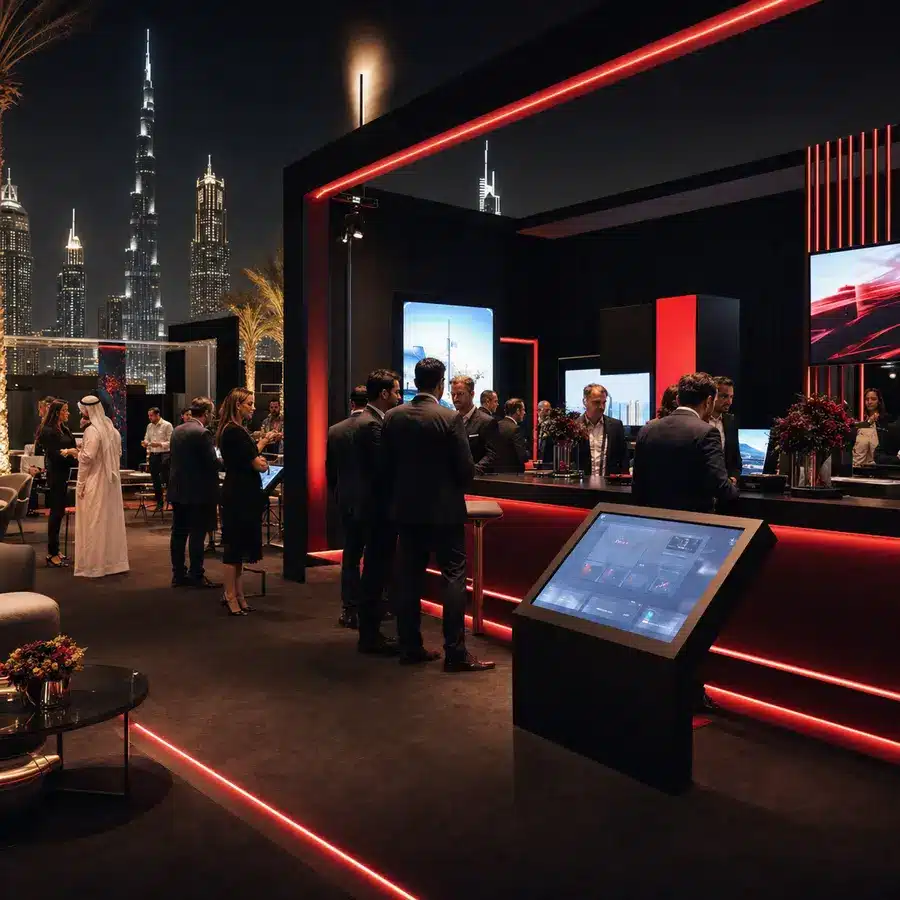
This is particularly useful at large business events in Dubai, where many companies and attendees may be present in the same venue.
Encourage Team Connection
Clothing can also create an internal sense of unity.
When employees wear apparel connected to the company, they may feel more visibly connected to the organization and their colleagues.
This does not replace good workplace culture, but it can support a shared team identity.
Choose Corporate Apparel That Matches Your Brand
Not every company should use the same type of clothing.
Your apparel should reflect your industry, customers, working environment, and company personality.
Apparel Choices by Business Type
| Business Type | Suitable Apparel |
|---|---|
| Corporate office | Formal shirts and smart polos |
| Restaurant | Branded aprons and shirts |
| Retail store | Polos and comfortable shirts |
| Construction company | Branded safety clothing |
| Technology company | Modern polos and jackets |
| Fitness business | Performance clothing |
| Hospitality business | Refined uniforms |
| Exhibition team | Coordinated branded shirts |
A financial company may prefer a polished appearance, while a fitness brand may benefit from athletic clothing.
Consider Your Employees’ Daily Work
The clothing should suit the job.
Ask:
- Will employees work indoors or outdoors?
- Will they move frequently?
- Is the environment warm?
- Do they need protective clothing?
- Will customers interact with them?
- How many hours will they wear the apparel?
Comfort should never be sacrificed simply to make the logo more visible.
Select the Right Fabric and Garment Quality
The quality of the garment affects both employee comfort and brand perception.
Poor quality clothing can fade, shrink, lose its shape, or become uncomfortable after repeated washing.
Compare Common Fabric Options
| Fabric | Main Benefit | Suitable Use |
|---|---|---|
| Cotton | Comfortable and breathable | Office and casual use |
| Polyester | Durable and easy to maintain | Events and active work |
| Cotton blend | Balance of comfort and strength | General staff clothing |
| Performance fabric | Moisture management | Outdoor and active roles |
| Oxford fabric | Structured appearance | Formal workplace clothing |
Dubai’s climate also deserves attention.
For employees who work outdoors or move between indoor and outdoor locations, lightweight and breathable materials may be more comfortable.
Test Before Ordering in Large Quantities
Request samples before placing a substantial order.
Check:
- Fabric feel
- Stitching
- Size accuracy
- Colour
- Logo appearance
- Washing performance
- Overall comfort
A sample gives you a better idea of what employees will actually receive.
Use Printing and Embroidery Strategically
The way your brand is applied to clothing can influence the final appearance.
Embroidery
Embroidery can create a refined and durable result.
It works particularly well for:
- Polo shirts
- Formal shirts
- Jackets
- Caps
- Hospitality clothing
A small embroidered logo can look professional without dominating the garment.
Screen Printing
Screen printing can be useful for larger artwork and higher quantity orders.
It is commonly used for:
- T shirts
- Event clothing
- Promotional apparel
- Casual uniforms
Direct to Garment Printing
Direct to garment printing can work well when the design includes detailed artwork or multiple visual elements.
Choose the Method According to the Garment
| Method | Strong Point | Suitable Application |
|---|---|---|
| Embroidery | Professional appearance | Corporate uniforms |
| Screen printing | Efficient for larger designs | Event T shirts |
| Direct to garment | Detailed artwork | Promotional clothing |
| Heat transfer | Flexible customization | Names and numbers |
Your supplier should recommend a method based on fabric, artwork, quantity, washing requirements, and expected usage.
Use Corporate Apparel as a Marketing Tool
Corporate clothing does not have to remain inside the workplace.
It can become a moving form of brand communication.
Increase Exposure at Events
Employees wearing matching branded apparel are easier to identify at:
- Trade shows
- Conferences
- Product launches
- Corporate events
- Networking sessions
- Promotional campaigns
A coordinated team can create a stronger visual presence without requiring additional advertising space.
Support Local Brand Recognition
In Dubai, businesses often operate across busy commercial districts and customer facing environments.
Branded apparel can help create repeated exposure when employees travel between offices, customer locations, events, and service areas.
This supports mobile brand advertising in a natural way.
Keep the Design Memorable
A good apparel design does not need to contain every company detail.
A recognizable logo, appropriate colour combination, and clean layout may be enough.
Avoid turning the garment into a crowded advertisement.
Create Apparel for Different Employee Groups
One design may not work equally well for every department.
Build an Apparel System
A company can maintain a common brand identity while adapting garments for different roles.
For example:
| Department | Apparel Direction |
|---|---|
| Sales | Smart branded polo |
| Management | Formal branded shirt |
| Technical team | Practical work shirt |
| Event team | Branded T shirt |
| Warehouse team | Durable workwear |
| Customer support | Comfortable office apparel |
The company identity remains consistent while the clothing reflects the employee’s responsibilities.
Use Role Identification Carefully
Adding employee names or job titles can make customer interactions easier.
For example:
Ahmed
Customer Support
This tells visitors whom they are speaking with without requiring a separate name badge.
For large teams, however, individual personalization can increase production time and cost.
Corporate Apparel and Employee Experience
Employees are more likely to appreciate company clothing when it is comfortable, useful, and thoughtfully selected.
Give Employees Suitable Options
If possible, provide different sizes and appropriate garment choices.
For some workplaces, employees may prefer:
- Polo shirts
- Formal shirts
- Lightweight jackets
- T shirts
- Vests
Offering reasonable choices can improve acceptance.
Pay Attention to Fit
A company logo cannot compensate for uncomfortable clothing.
Make sure sizing is accurate and provide employees with a clear size guide before production.
This is particularly important when ordering clothing from different manufacturers because sizing can vary.
Consider Seasonal Needs
Dubai’s climate creates different clothing requirements throughout the year.
For indoor environments with strong air conditioning, a lightweight outer layer may be useful.
For outdoor work, breathable clothing can be more suitable.
Build a Consistent Corporate Apparel Strategy
Buying clothing occasionally is different from creating a proper apparel program.
A strategy helps maintain consistency as the company grows.
Create Brand Guidelines for Clothing
Your guidelines can define:
- Logo placement
- Approved colours
- Garment types
- Printing methods
- Employee role identification
- Acceptable artwork
- Size requirements
This prevents every department from ordering completely different clothing.
Maintain a Simple Apparel Catalogue
A company can create an internal catalogue with approved items.
For example:
| Category | Approved Item |
|---|---|
| Daily staff wear | Polo |
| Formal meetings | Branded shirt |
| Outdoor duties | Lightweight work shirt |
| Events | T shirt |
| Cold indoor spaces | Jacket |
| Headwear | Cap |
This makes future ordering easier and keeps the company appearance consistent.
Common Corporate Apparel Mistakes
A few poor decisions can reduce the value of branded clothing.
Choosing Appearance Over Comfort
Employees may avoid wearing clothing that looks good but feels uncomfortable.
Choose materials and designs that suit the working environment.
Making the Logo Too Large
Oversized branding can make professional clothing look more like advertising merchandise.
Use a size and position that fits the garment.
Ignoring Colour Accuracy
The garment colour should align with your approved brand palette.
Differences between digital artwork and physical production can affect consistency.
Always review a physical sample when colour accuracy matters.
Ordering Without Size Planning
An incorrect size distribution can leave some employees without suitable clothing.
Collect accurate sizing information before production.
Using Low Quality Garments
Cheap clothing may look acceptable when new but deteriorate quickly.
Poor durability can increase replacement costs and weaken your visual identity.
Changing Designs Too Frequently
Constantly changing apparel styles can make the brand look inconsistent.
Update designs when there is a genuine business reason rather than changing them without a clear purpose.
Expert Tips for Better Branded Corporate Apparel
A few practical choices can improve the results of your apparel program.
Keep Your Main Design Simple
A clean logo and restrained layout usually remain attractive for longer.
Match Clothing With Your Brand Personality
A luxury business may need refined garments.
A youthful company may prefer a more relaxed style.
A technical company may need functional workwear.
Consider Washing Requirements
Employees may wash uniforms frequently.
Ask the supplier how the printing or embroidery performs after repeated washing.
Test the Logo Placement
A logo that looks good on a computer screen may not look equally good on a real garment.
Review placement on the actual shirt, jacket, cap, or other item.
Think About Long Term Cost
Do not compare suppliers only by the initial price.
Consider:
- Garment quality
- Expected lifespan
- Printing durability
- Replacement frequency
- Delivery
- Customization
- Minimum order requirements
A slightly more expensive garment may provide better value if it lasts significantly longer.
How to Measure the Value of Corporate Apparel
Branded clothing is partly a marketing investment and partly an employee resource.
Its value can be evaluated through several indicators.
Track Practical Results
| Measurement | What It Can Tell You |
|---|---|
| Employee usage | Whether staff accept the apparel |
| Customer recognition | Whether people identify employees easily |
| Event visibility | How noticeable the team appears |
| Replacement frequency | Garment durability |
| Employee feedback | Comfort and satisfaction |
| Brand consistency | Whether teams maintain the desired appearance |
You can also ask employees for feedback after several weeks.
Questions could include:
- Is the clothing comfortable?
- Does the size fit properly?
- Is it suitable for your role?
- Does it remain presentable after washing?
- Would you prefer another garment style?
This information can improve future orders.
Conclusion
Branded corporate apparel can become an important part of a company’s identity.
When employees wear thoughtfully designed clothing, the brand becomes more visible, teams become easier to identify, and customers receive a more consistent impression across different interactions.
For businesses in Dubai, the right apparel should balance appearance, comfort, durability, climate suitability, and brand recognition.
Start with your business objectives. Select garments that suit employee roles. Use quality fabrics, appropriate customization methods, and consistent visual guidelines. Test samples before large orders and gather employee feedback after distribution.
The goal is not simply to put a logo on clothing. The goal is to create apparel that employees are comfortable wearing and customers can easily associate with your company.
When those two objectives come together, corporate branded clothing can support both workplace identity and long term brand recognition.
FAQs
How does branded corporate apparel improve brand identity?
It creates a consistent visual connection between employees and the company. When staff members wear recognizable clothing during daily work, customer visits, and business events, people can associate the appearance with the brand more easily.
What type of corporate apparel is best for Dubai?
The right choice depends on the workplace and employee responsibilities. Lightweight polos, breathable shirts, practical workwear, jackets, and event clothing can all be suitable depending on the environment and role.
Is embroidery better than printing for corporate clothing?
Neither method is universally better. Embroidery can provide a refined appearance and strong durability, while printing can work well for larger artwork and detailed designs. The best method depends on the garment, artwork, quantity, and intended use.
How can companies make branded uniforms comfortable?
Select breathable materials, appropriate garment cuts, accurate sizes, and styles suited to the employee’s daily activities. Testing samples with employees before a large order can help identify comfort issues.
How often should companies replace branded corporate apparel?
There is no fixed replacement period. Replacement should depend on garment condition, washing frequency, employee usage, brand standards, and changes in company identity. High quality apparel can remain useful for considerably longer when properly maintained.

Rosalina D. Willaim
Blogger/Photographerhe whimsically named Egg Canvas is the design director and photographer in New York. Why the nam


August 31, 2026
How to Create a Successful Brand Activation Campaign in Dubai

August 31, 2026